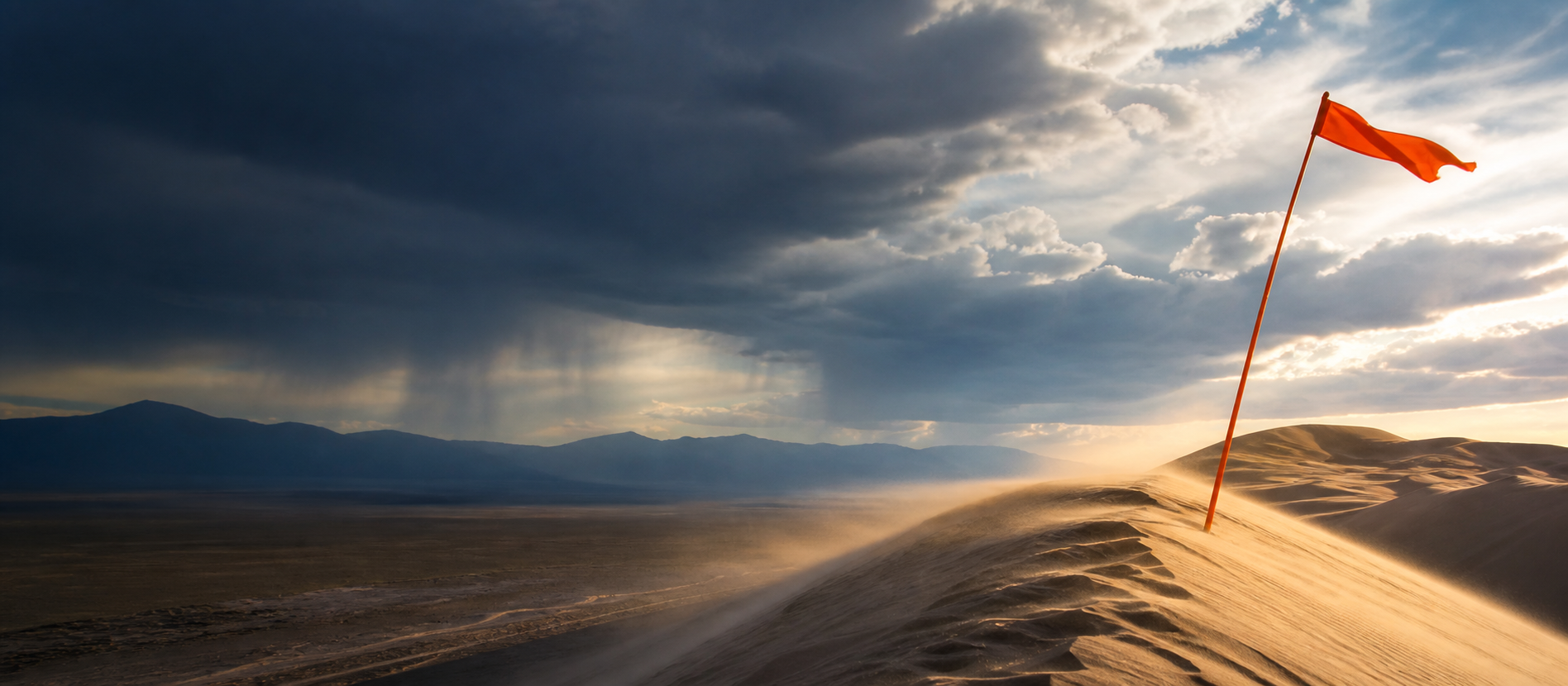
A changing high-desert weather front with rain, blowing sand, and an orange safety flag over Sand Mountain

Wind writes the riding plan

Read the sky before reading the dune.

Out here the forecast is only half the story. Wind decides how the day actually goes, and the sand rides differently depending on what the weather has been doing all week.

Current conditions

Live readings load here when the forecast service responds. Everything below this panel applies either way.

Temperature
Check current
Feels like
Check current
Wind
Check current
Gusts
Check current
Sky
Check current

Riding read: verify on site. Wind and surface change faster than any forecast updates, and the flags in camp are the current conditions.

Seven-day outlook

The seven-day outlook loads here. Open the National Weather Service forecast for the official version, which is the one to use for any decision that matters.

Live data from Open-Meteo, refreshed when the page loads. The National Weather Service is the official source. Open the NWS point forecast.

Spring and fall are the seasons

Both give you moderate days and cold nights, which is normal high desert and easy to plan for with layers. They are also when the sand tends to hold some moisture, and moist sand rides better and traps fewer machines. If you have a free weekend and no other constraint, this is the answer.
Summer is hot, empty, and harder riding

The heat is the obvious problem and the shade is nonexistent. The less obvious problem is that dry summer sand supports a machine poorly, so you get stuck more often and work harder for the same ride. Summer does buy you an almost empty dune, which some people will happily take. Just go in with more water, more recovery gear, and shorter loops than you would plan in April.

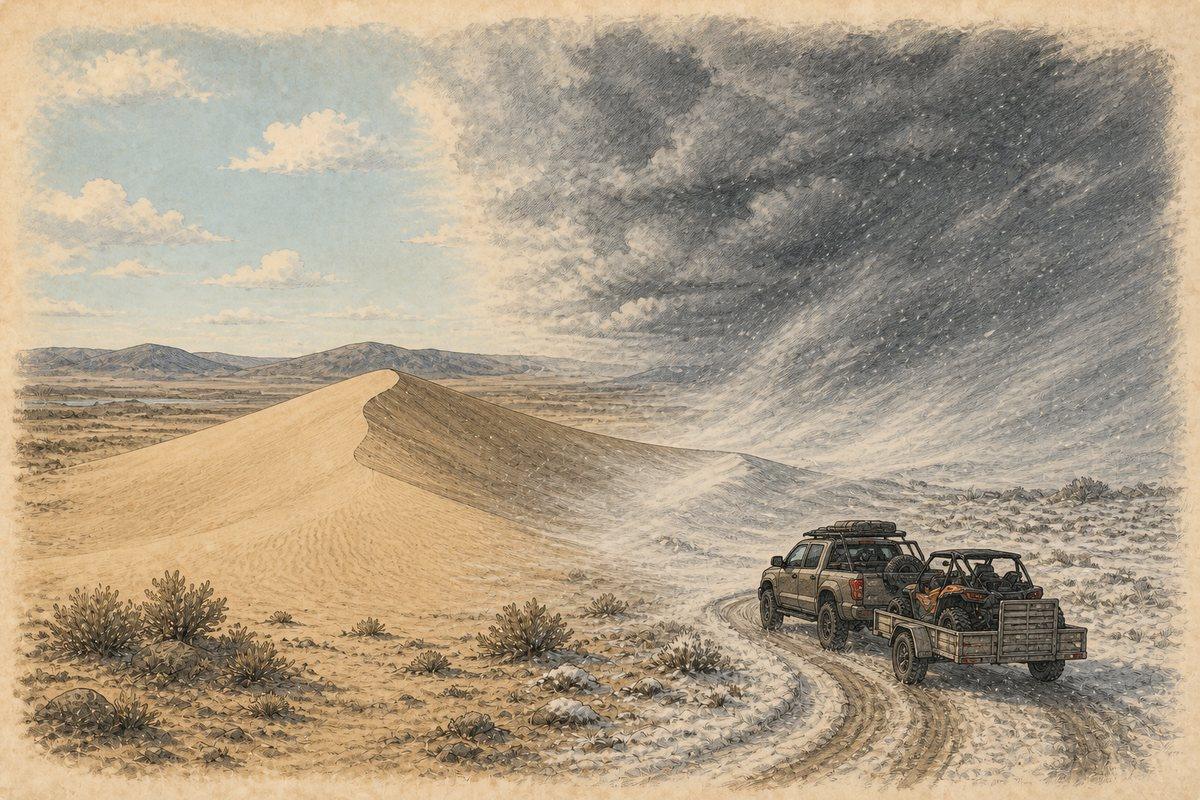
Clear winter sun gives way to a fast snow squall as a tow rig turns away from Sand Mountain
Illustration: the rapid change from a clear winter dune to a wind-driven squall.

Winter is a coin flip

It can be genuinely lovely, still and clear with the whole place to yourself. It can also be snowing sideways. The gap between those two is a few hours, so winter is the season to keep the trip flexible, watch the forecast right up to departure, and be willing to turn the rig around.

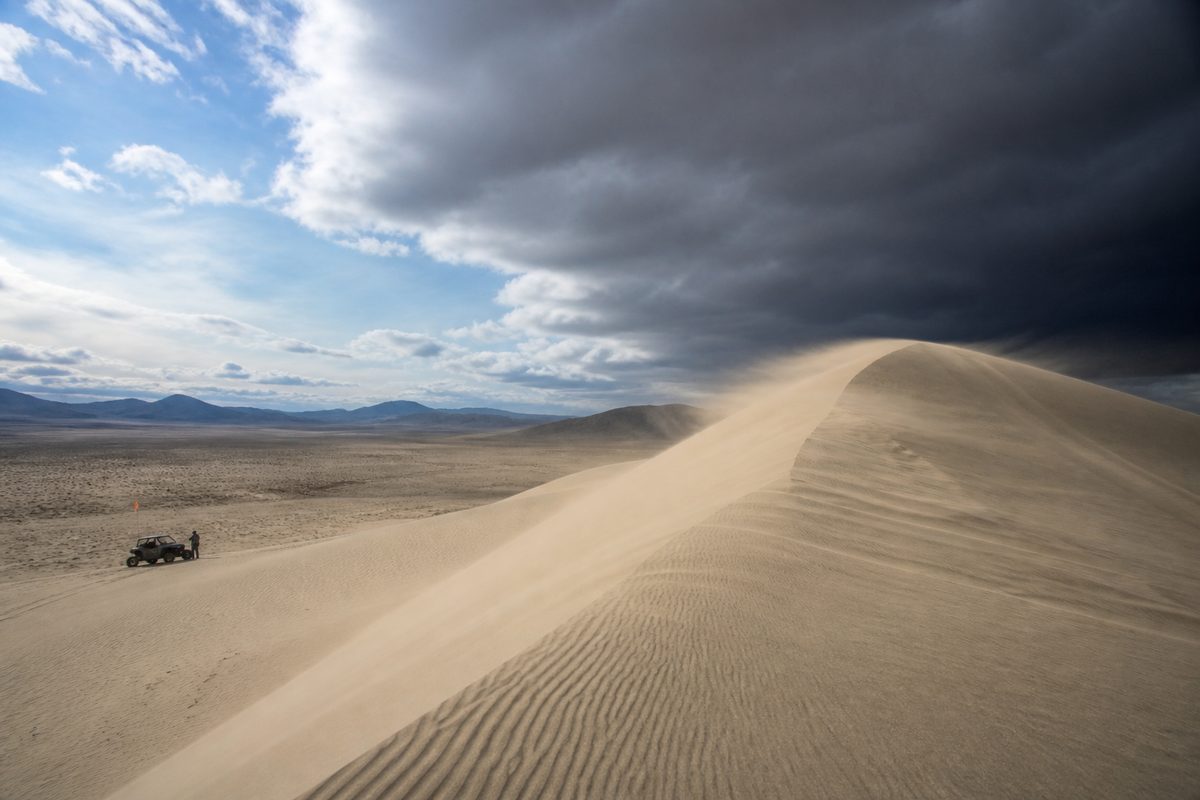
Wind lifting sand off the crest of Sand Mountain and flattening visibility across the dune face
Illustration of high-desert wind moving sand. Not a documentary photograph.

Wind is not a matter of if

It is a matter of when. Plan on it. Goggles are not optional equipment here, a spare set is a good idea, and anything in camp that is not staked, sealed, or stowed should be treated as already gone. Blowing sand also flattens contrast until a face you know well stops reading as a shape, and that is a turnaround signal rather than a challenge.

Watch the storm you think is far away

Great Basin horizons make weather look much further off than it is. Thunder, lightning, or a visible dust wall means stop riding and get people into hard-sided vehicles, not one more lap. The open dune is the highest exposed ground for miles in any direction.

Check fire restrictions with the forecast

Restrictions can change quickly through the dry months and they are not always what they were on your last visit. Check the current BLM notice for Sand Mountain alongside the forecast, before you load firewood rather than after you have hauled it out here.

Let the flags tell you the truth

Whatever the forecast said this morning, the whip flags in camp and the sand moving across the crests are the current conditions. If they disagree with your phone, believe them. The forecast is written for the valley floor, and you are riding the one thing for miles that stands 600 feet up into the wind.

Verify before travel. Conditions and regulations can change. Use the responsible agency's current information for final decisions.

Open the official BLM source →
Part of theDUNE GUIDE USA NETWORKLocally built dune guides. One place to start.