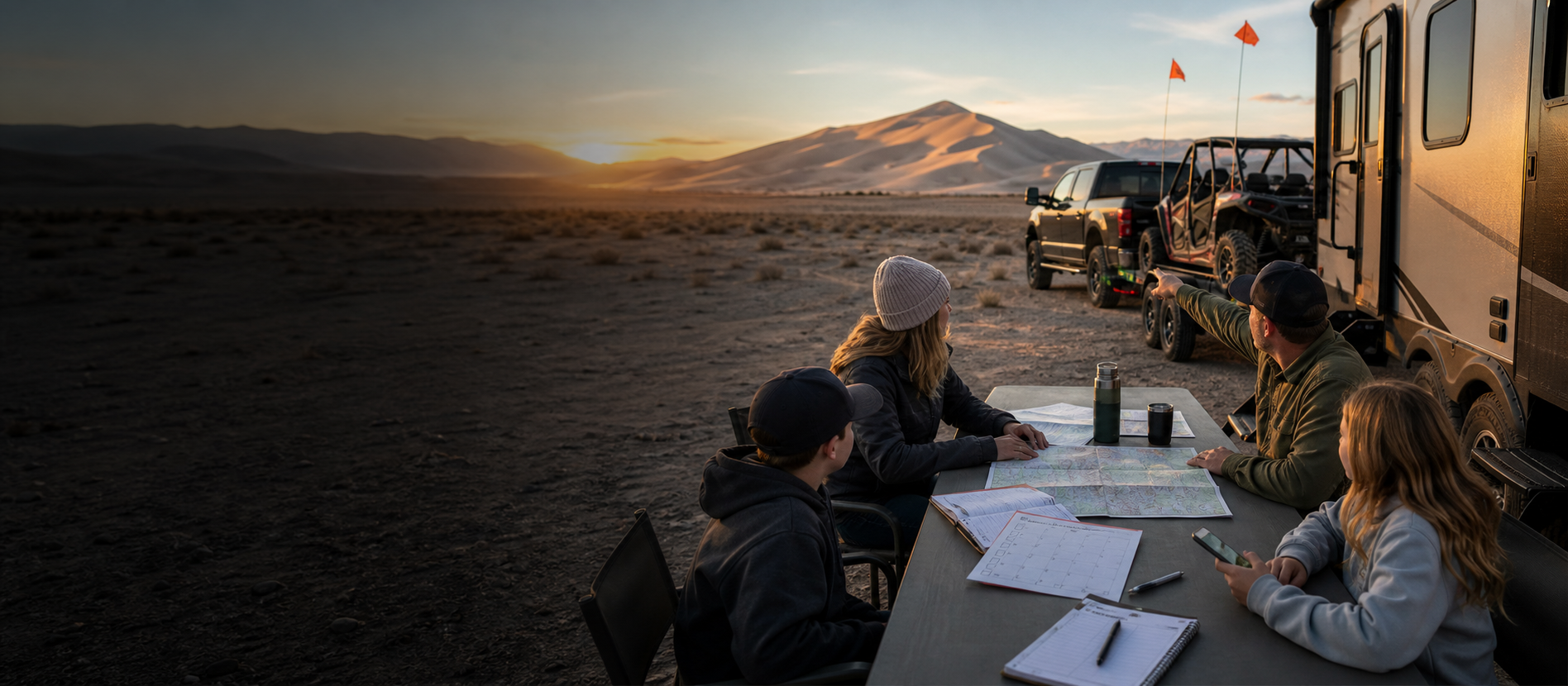
Friends planning a Sand Mountain trip with a map, checklist, and toy hauler camp beside the dunes

From maybe to packed

Build the trip in the order that matters.

Most Sand Mountain trips go wrong in the planning, not on the dune. Work through it in this order and the weekend mostly takes care of itself.

Interactive trip builder

Build your Sand Mountain plan.

Choose the trip you are actually taking, work through the destination checklist, then save, print, or share one plan with the whole group.

Before anyone leaves home

Your choices stay on this device unless you use Share.

Pick the dates before anything else

Spring and fall give you the best conditions. Tuesday and Wednesday are fee free all year, which is worth reshaping a schedule around. Halloween and Easter are the big weekends and they are a different experience entirely. Decide which trip you are taking before you book anything, because it changes every other answer on this page.

Sort the paperwork early

Buy the recreation pass on Recreation.gov unless you are arriving on a free day, and confirm Nevada OHV registration for every machine, remembering that resident and nonresident requirements differ. Do this at home. Service at the dunes is spotty and this is not a task for the shoulder of U.S. 50.

Plan water first, then everything else

There is no potable water at Sand Mountain. Not limited, none. Work out what the group drinks in a hot day, double it, and add what you need for cooking and washing. Then plan shade, because there is none of that either. These two decide whether people are still enjoying themselves on day two.

Fuel the whole weekend in one stop

Fallon is the last real fuel, about 25 miles west on U.S. 50, with Harmon Station as the backup on the way out and Middlegate if you are coming from the east. Calculate the tow rig on trailer weight, headwind, and the return leg, not on its usual number. Fill the machines and approved containers in town.

Match the rig to where you will park

Camping is primitive and first-come at the base of the dune, with Carsonite markers showing where it is allowed. A heavy two-wheel-drive motorhome needs to stay near hard pan. A four-wheel-drive truck with a lighter trailer has more freedom. Knowing which you are before you arrive saves an expensive recovery.

Brief the group before anyone starts an engine

Whip flags on every machine, helmets and goggles for anyone who might ride even if they said they would not, a radio channel agreed, a lead and a sweep rider named, and regroup points set. Share the same itinerary, the same map links, and the same emergency plan with everybody, including the person staying home who will raise the alarm.

Agree what ends the day

Decide in advance what turns the group around: wind, a dust wall, lightning, fuel, fading light, a mechanical warning, or a tired rider. Making that call is much easier when it was agreed in a driveway than when it has to be argued halfway up a dune. Everybody coming home together is the objective and the rest is detail.

Verify before travel. Conditions and regulations can change. Use the responsible agency's current information for final decisions.

Open the official BLM source →
Part of theDUNE GUIDE USA NETWORKLocally built dune guides. One place to start.