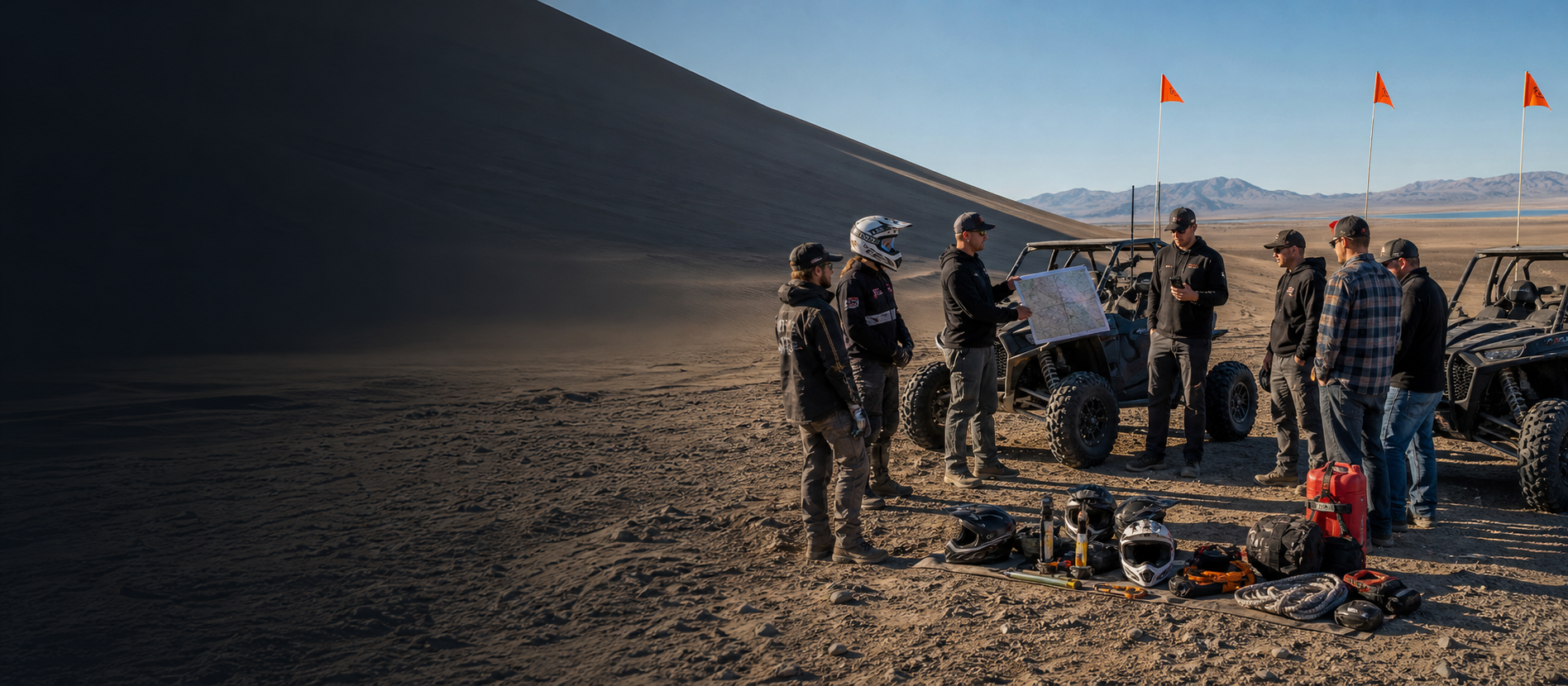
A Sand Mountain riding group reviewing maps, radios, recovery gear, and orange whip flags before departure

The mountain rewards preparation

Build the plan around the whole group.

Two things get people hurt here more than anything else, and neither is the one most riders expect. One is a blind crest. The other is the person who did not plan to ride and went out anyway.

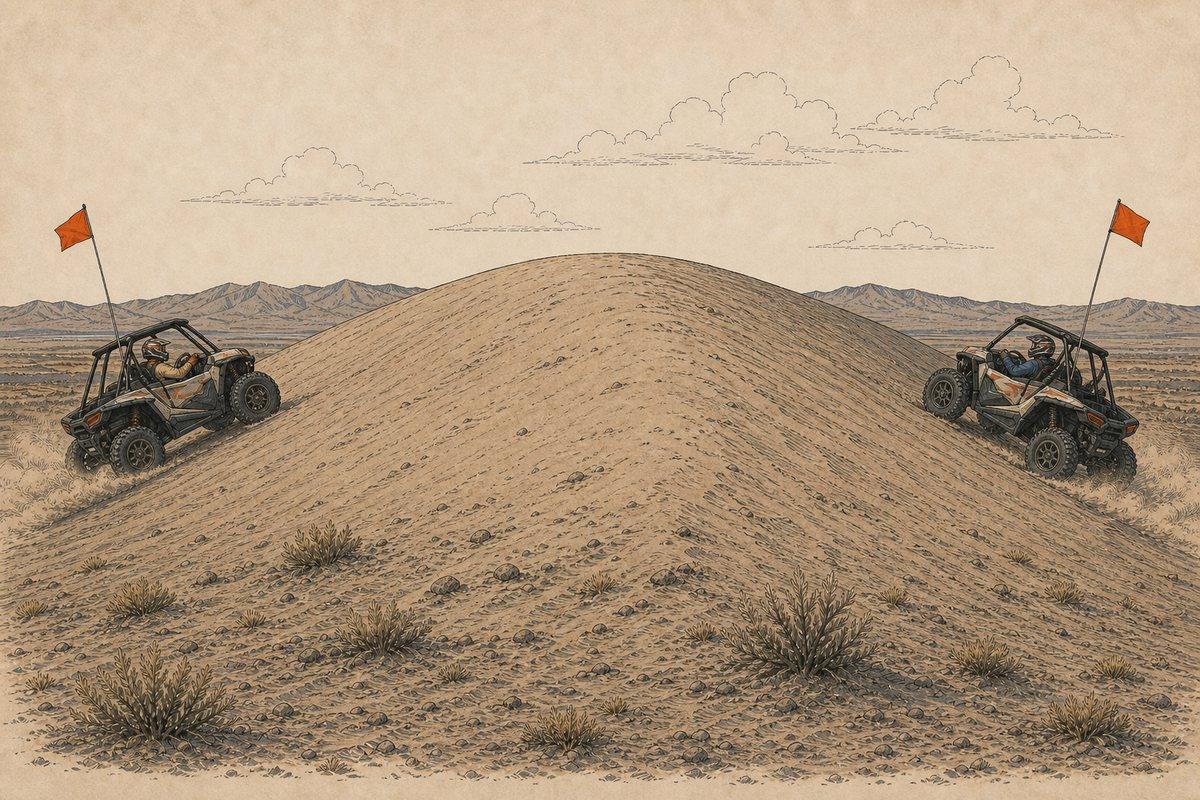
Two side-by-sides approach opposite faces of one blind crest while their tall orange flags appear above the ridgeline first
Illustration: rear-mounted whip flags warning of two machines on opposite sides of a blind crest.

The flag is about one specific crash

Whip flags are required and must stand well above the machine, and the reason is narrow and worth knowing. One of the most common serious accidents at any dune is a head-on between two riders climbing opposite sides of the same crest, neither of whom can see the other. The flag clears the ridgeline before the vehicle does. That is the entire job it has, and it does it whether or not you think you need it.
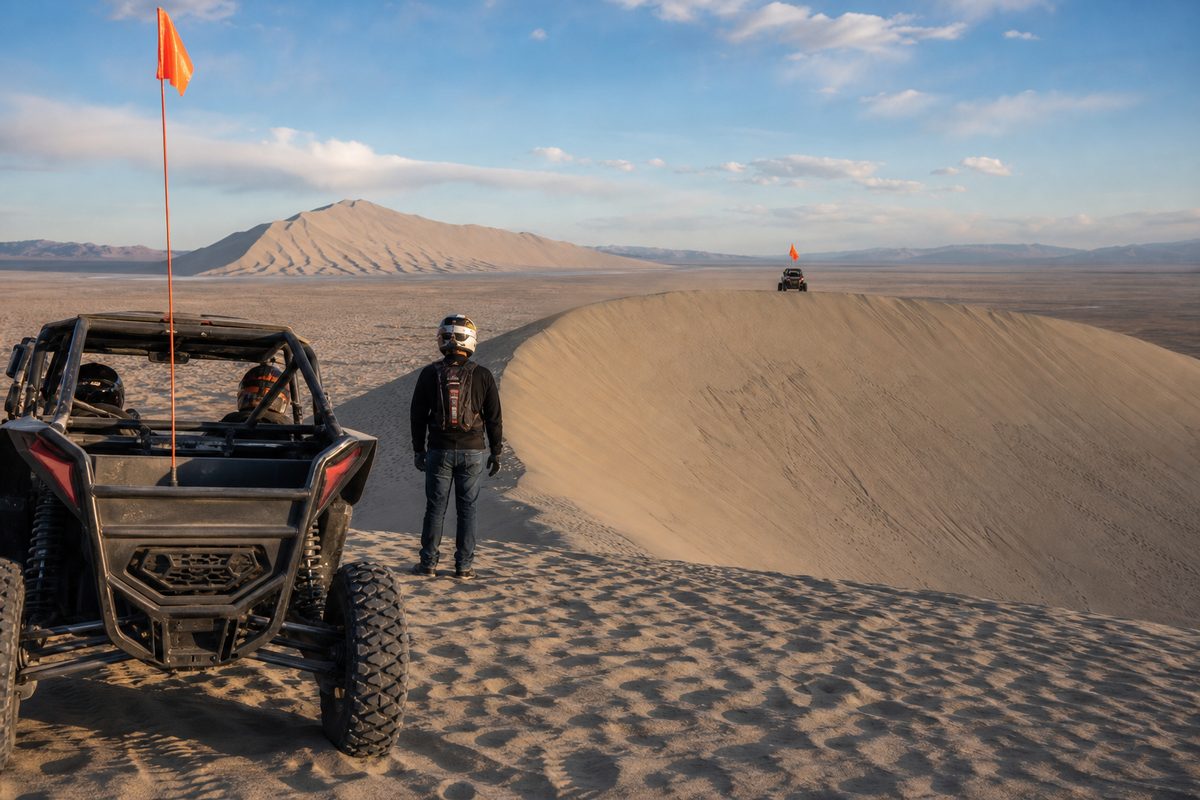
A rider approaching a dune crest where the ground beyond the ridgeline is completely hidden from view
Illustration of a blind crest approach. Not a documentary photograph.

Every crest is blind until it is not

Approach slowly enough that you could stop before the skyline. Cross at an angle where conditions allow it. Never let the group gather directly below a crest, because that is a landing zone. The dune does not owe you a sightline and blowing sand makes the problem worse by flattening contrast until a familiar face reads as nothing at all.

Head injuries come from the cage

This one surprises nearly everyone. In side-by-sides, most head injuries are riders striking their heads on the roll cage, not being thrown out of the machine. Helmets are not just for the crash you imagine, they are for the one that happens inside an intact vehicle. Nets, harnesses worn properly, and keeping arms inside matter for the same reason.

The rider who was not going to ride

The most common way a weekend goes wrong: someone came along to watch, the group heads out, and they take a machine without a helmet, without goggles, without the gear they never packed. If a person might ride at any point, they need the equipment from the start. Pack for the group you have, not the plan you announced.

Lids on Kids

BLM runs an annual helmet giveaway at Sand Mountain with Renown Children's Hospital and the Nevada Outdoor School, and it has handed out well over a hundred helmets in a single year. If you are bringing kids and the helmet situation is marginal, it is worth finding out when it runs rather than making do.

Lead, sweep, and a plan for stopping

Assign a lead rider and a sweep rider, agree a radio channel before anyone starts an engine, and stop at every confusing junction until the rider behind you has seen the route. Set regroup points in advance rather than improvising them. The fastest machine in the group does not get to write the plan.

Carry what a rescue needs

Recovery gear rated for the machines you brought, a first aid kit, a fire extinguisher, tools, tire patches, water, and a communication plan that survives no cell service. Tire patches deserve a specific mention because almost nobody carries them and a lot of people need them. Fuel, daylight, wind, fatigue, or a mechanical warning are all reasons to end the day early. Returning together is the whole objective.

Set up satellite SOS before you need it

Coverage out on the sand is sporadic, which is why BLM asks people to buy passes before they arrive. An iPhone 14 or later can text emergency services over satellite with no cell signal at all, and Apple has repeatedly extended the free period, most recently into late 2026. Check what your own device has rather than assuming. Practise with the demo mode outdoors under open sky before the trip, because an emergency is a terrible time to learn a menu. In a real emergency try 911 first and use satellite only if the call will not connect. Two things are worth knowing before you rely on it. Emergency SOS via satellite and Messages via satellite are different features, and only the first one reaches rescuers. And separately from Apple, T-Mobile now offers text to 911 over Starlink satellites free to anyone with a compatible phone, including Verizon and AT&T customers, aimed squarely at the parts of the country with no tower coverage. Some newer Android phones have their own satellite emergency feature, so check your model rather than assuming it behaves the same way. All of it needs a clear view of the sky, and all of it can be delayed.

Apple: Use Emergency SOS via satellite →

Verify before travel. Conditions and regulations can change. Use the responsible agency's current information for final decisions.

Open the official BLM source →
Part of theDUNE GUIDE USA NETWORKLocally built dune guides. One place to start.