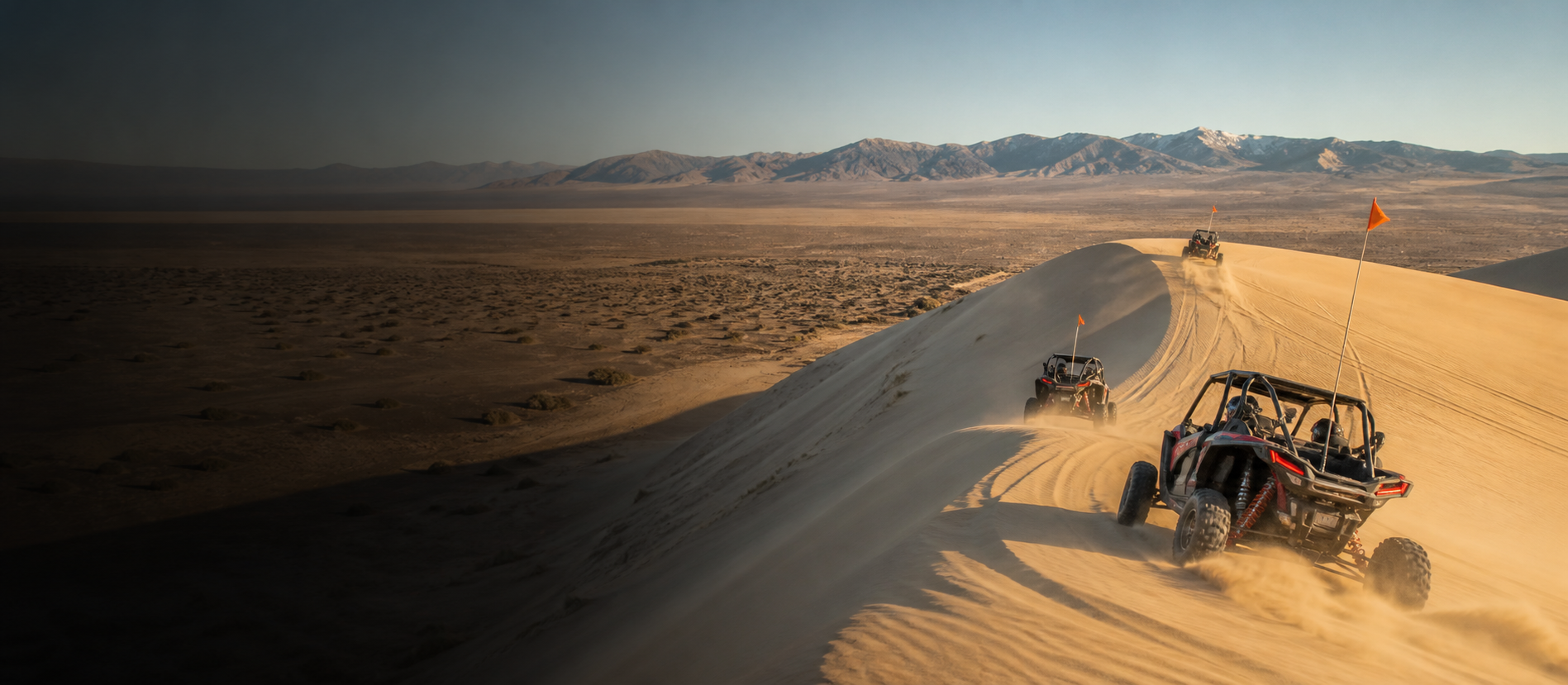
A spaced group of side-by-sides with orange whip flags riding a Sand Mountain dune ridge

A 600-foot Great Basin landmark

Read the mountain before you ride it.

One dune, 600 feet of it, plus a designated trail system around the outside. The mountain is not large by desert standards, and that is exactly why it rewards riders who read it instead of attacking it.

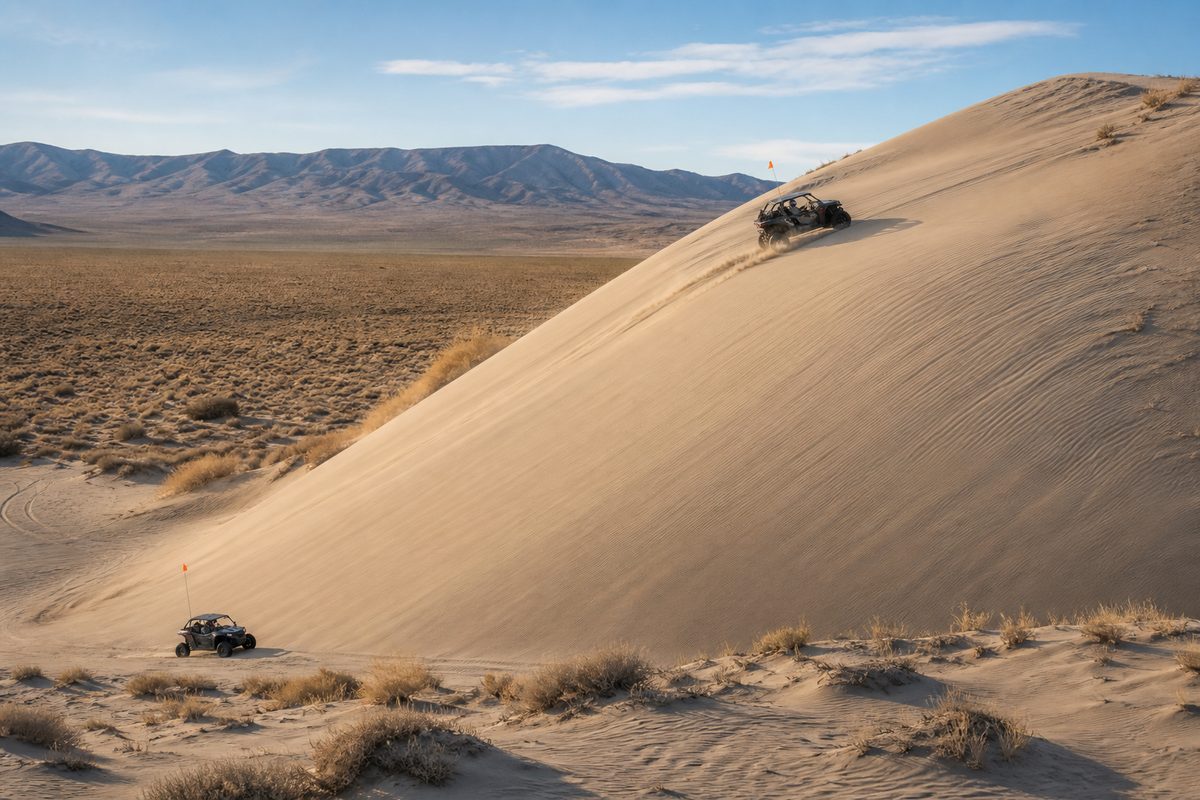
The full 600-foot height of Sand Mountain with machines small against the face for scale
Illustration of the dune's scale. Not a documentary photograph.

The shape of the place

BLM puts Sand Mountain at 4,795 acres, roughly three and a half miles long, a mile wide, and 600 feet high. It is the largest dune field in this part of Nevada. It is also honest to say it is not one of the giant fields, and that framing matters if you are towing in from somewhere bigger. What it lacks in square miles it makes up in vertical.
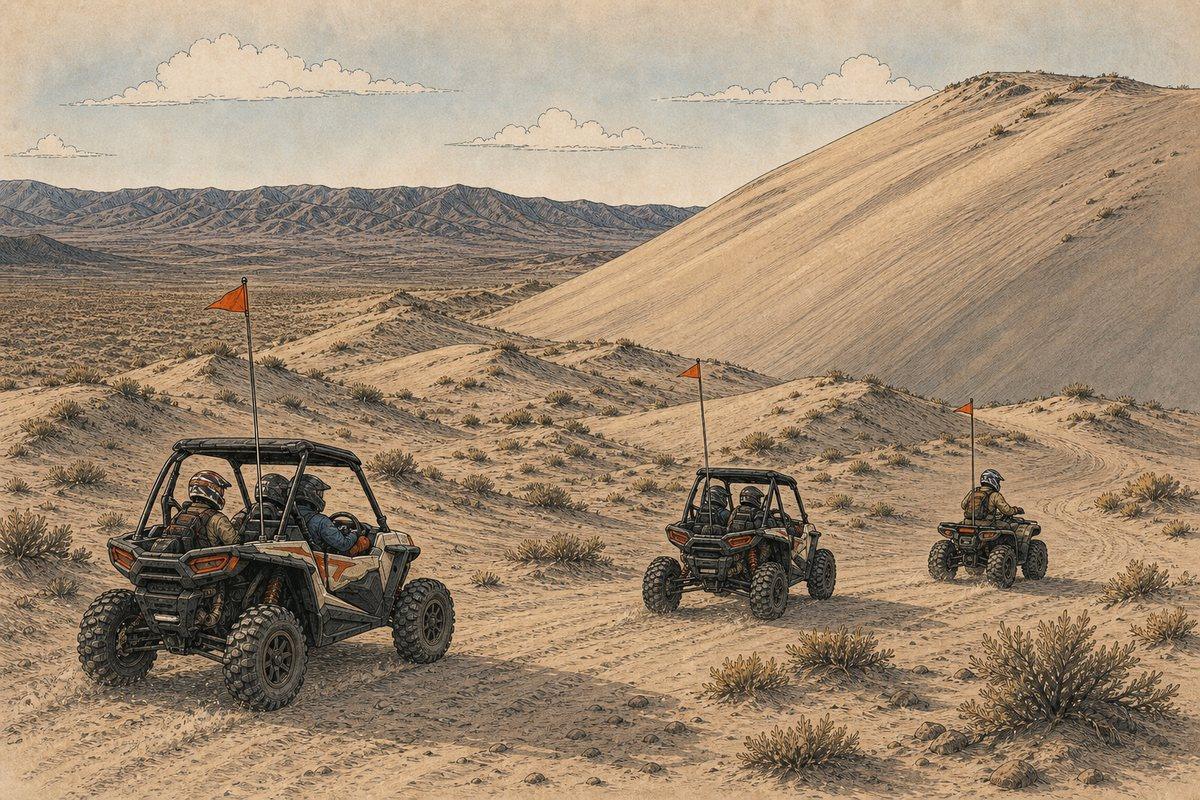
A mixed group follows a gentle orientation loop across the smaller western dunes with the main face of Sand Mountain beyond
Illustration: starting on the smaller western dunes before committing to the main face.

Start at the western end

The dunes nearest U.S. 50, at the western end, are the smaller ones. That is where to start if you are new, if the group is mixed, or if you simply want to learn what the sand is doing today before committing to anything. Nobody regrets an easy first loop. Plenty of people regret the opposite.

You do not have to summit

You can ride all the way around the dune field without ever climbing to the top. That is a real option for a nervous rider, a young rider, or a machine that is not set up for a steep face. The most popular line is straight up the face to the summit, and on a quiet day the payoff up there is hearing the dune itself. Neither route is the correct one.

Named ground

The Super Bowl is a large bowl feature on the north side and the one people ask about by name. There are also two oddities out on the sand, a tether ball pole and a swing set, that regulars deliberately will not give directions to. Finding them is the point, so we are not going to spoil it either.

Flotation, not clearance

Dune riding rewards flotation and does not care about ground clearance. That means running tire pressure as low as your setup safely allows, which is where beadlocks earn their money, because they remove the risk of unseating a bead down low. If the machine is trailered you never have to air back up at the end of the day, so there is no practical reason to keep pressure high. Pick numbers for your own tire and wheel combination rather than copying someone else's.

Dry sand rides worse

This surprises people. High summer at Sand Mountain is hot, quiet, and harder riding, because dry sand supports a machine poorly and you get stuck considerably more than you do when there has been some moisture in it. If your only free week is in July, plan for recovery gear and shorter loops rather than expecting the surface you saw in the spring photographs.

The trails are part of the deal

Around the open dune, roughly 23 miles of designated routes exist to keep traffic off rare habitat. Outside the open riding area, stay on them. That trail network and the signed closures are the arrangement that keeps the mountain itself open, which makes staying on route the cheapest thing any rider does all weekend.

Verify before travel. Conditions and regulations can change. Use the responsible agency's current information for final decisions.

Open the official BLM source →
Part of theDUNE GUIDE USA NETWORKLocally built dune guides. One place to start.